

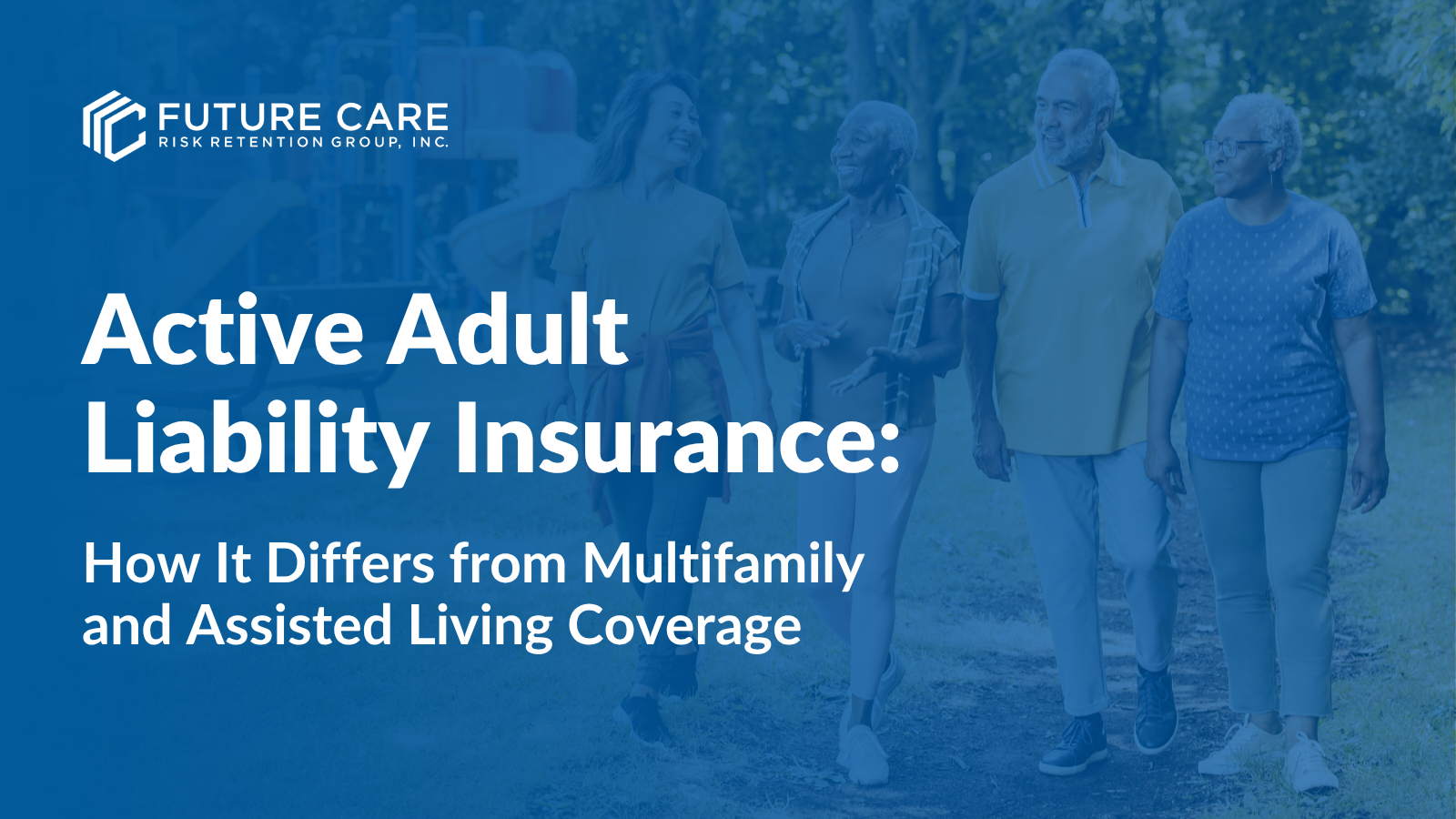
Active Adult communities occupy a space that is not sufficiently taken care of by traditional insurance models. While they are not multifamily housing or assisted living, Active Adult communities are often underwritten as one or the other. This mismatch creates exposure because the Active Adult operational model is fundamentally different.
Why Active Adult Liability Insurance Is a Category of Its Own
Active Adult communities are designed for independence, engagement, and lifestyle-focused living. Yet, they are increasingly exposed to care-adjacent expectations and liability pressures. This combination creates a unique operating model that carries its own set of expectations, interactions, and potential liability considerations.
Multifamily Housing
Multifamily housing liability insurance is designed for residential properties where the landlord-tenant relationship is the primary operational model. Coverage is built around property and premises-based exposures, such as slip-and-fall incidents in common areas or property damage claims. It does not account for service-related expectations or the kind of programming and resident engagement that define more dynamic senior living environments.
Assisted Living
Assisted living liability insurance is designed for licensed care facilities where operators are responsible for the health, safety, and daily care of their residents. Coverage is structured around clinical services, professional care delivery, and the regulatory obligations that come with operating as a care provider. The assumptions built into these policies reflect a formal care relationship between staff and residents that does not exist in an Active Adult setting.
Active Adult Community
Active Adult community liability insurance is designed for independent, lifestyle-focused communities that offer amenities, programming, and resident engagement without providing formal care services. Coverage addresses the exposures unique to this model, including premises liability for recreational spaces and common areas, professional liability tied to wellness programming and concierge-style services, and transportation coverage where applicable. Because Active Adult communities can face care-related allegations even when no care is formally provided, their liability insurance requires a purpose-built approach that reflects how these communities actually operate.
Where Risk Develops in Active Adult Communities
Most Active Adult communities do not provide care. However, that reality does not prevent allegations of responsibility. Claims often arise not from the services formally offered, but from how those services are perceived over time.
Risk in Active Adult environments is largely driven by mismatched expectations, and those expectations are shaped through routine operations rather than isolated incidents.
Exposure tends to develop gradually through everyday interactions, including:
Programming and amenities that resemble care-adjacent services
Marketing and communications that suggest a higher level of support
Staff interactions that create informal or inconsistent expectations
Resident and family assumptions about oversight, safety, or intervention
Expansion of services without clearly defined operational boundaries
A wellness check may be interpreted as ongoing oversight. Transportation support may be viewed as a duty of care. Staff familiarity may be mistaken for supervision. Over time, these patterns create a perceived scope of responsibility that extends well beyond the community's intended model.
Exposure develops not from a single failure, but from the gradual misalignment between what is provided, what is communicated, and what residents and families come to expect.
What Active Adult Liability Insurance Should Cover
Because the risk profile of an Active Adult community is distinct, their coverage structure needs to reflect these differences. Standard multifamily and senior care policies were not designed with this operating model in mind, which means the exposures that matter most often go unaddressed.
A liability program built for Active Adult communities should include:
General Liability coverage aligned to hospitality-style operations, addressing bodily injury and property damage in an environment that functions more like a lifestyle destination than a healthcare setting.
Premises Liability for common areas, amenities, and recreational spaces. The pools, fitness centers, event venues, and shared gathering areas that define Active Adult living generate foot traffic and exposure.
Professional Liability tied to wellness programming, concierge services, and care-adjacent offerings. This is where perception risk concentrates. Services that are not formally care can still generate allegations of negligence when residents or families interpret them as such.
Hired and Non-Owned Auto (HNOA) coverage for communities that provide or coordinate resident transportation. A duty of care can be implied even when a formal transportation program is not in place.
Excess Liability and Umbrella coverage based on portfolio needs, particularly for operators managing multiple communities or communities with a growing amenity footprint.
Because every Active Adult Community is unique, coverage structures should be developed collaboratively between the insurer and facility, with attention to how the community operates, what services are offered, how those services are communicated to residents and families, and where the boundaries of independent living are clearly defined.
A Difference Approach: Coverage, Education, and Risk Partnership
Protecting an Active Adult community requires more than a well-structured policy. It requires alignment between coverage, operations, and the expectations being set with residents and families every day.
Future Care RRG's approach to Active Adult liability insurance is built around this reality. This includes:
Clear boundary management between independent living and care-related activities
Ongoing risk guidance informed by real-world claims experience
Operational support and staff education around admissions, communication, and service design
Proactive identification of exposure trends before they develop into claims
Support through growth and innovation to help communities expand while maintaining appropriate controls
The result is not a static insurance program or a checklist-based risk model. It is an ongoing partnership built around how risk actually develops in Active Adult environments.
Because exposure is driven by perception, communication, and day-to-day operations, coverage alone is not enough. The Active Adult model requires consistent alignment between what is offered, how it is delivered, and how it is understood by the people living and working in the community. Addressing those factors directly, before expectations drift or assumptions take hold, reduces the conditions that lead to claims in the first place.
Conclusion: Protecting the Active Adult Model
Active Adult communities are built on independence, lifestyle, and resident engagement. Protecting that model takes more than standard coverage. It takes a clear understanding of how these communities operate, where their unique risks develop, and a customized liability insurance program built to address those needs.
If you are evaluating coverage for an Active Adult community or portfolio, Future Care RRG welcomes the opportunity to review your current structure and provide a preliminary assessment aligned with your operating model.
Learn more about our Active Adult Program or Get a Quick Indication.
Future Care Risk Retention Group is a member-owned liability insurance provider built specifically to be a better solution for senior care providers and Active Adult communities. Our approach combines tailored underwriting and innovative insurance solutions with collaborative risk management and proactive claims strategies to help our members reduce liability exposure and support long-term operational stability.
This blog was written by Future Care Risk Retention Group (RRG). Future Care RRG provides Professional Liability, General Liability, Employee Benefit Liability, and supplemental coverages for senior care providers nationwide.